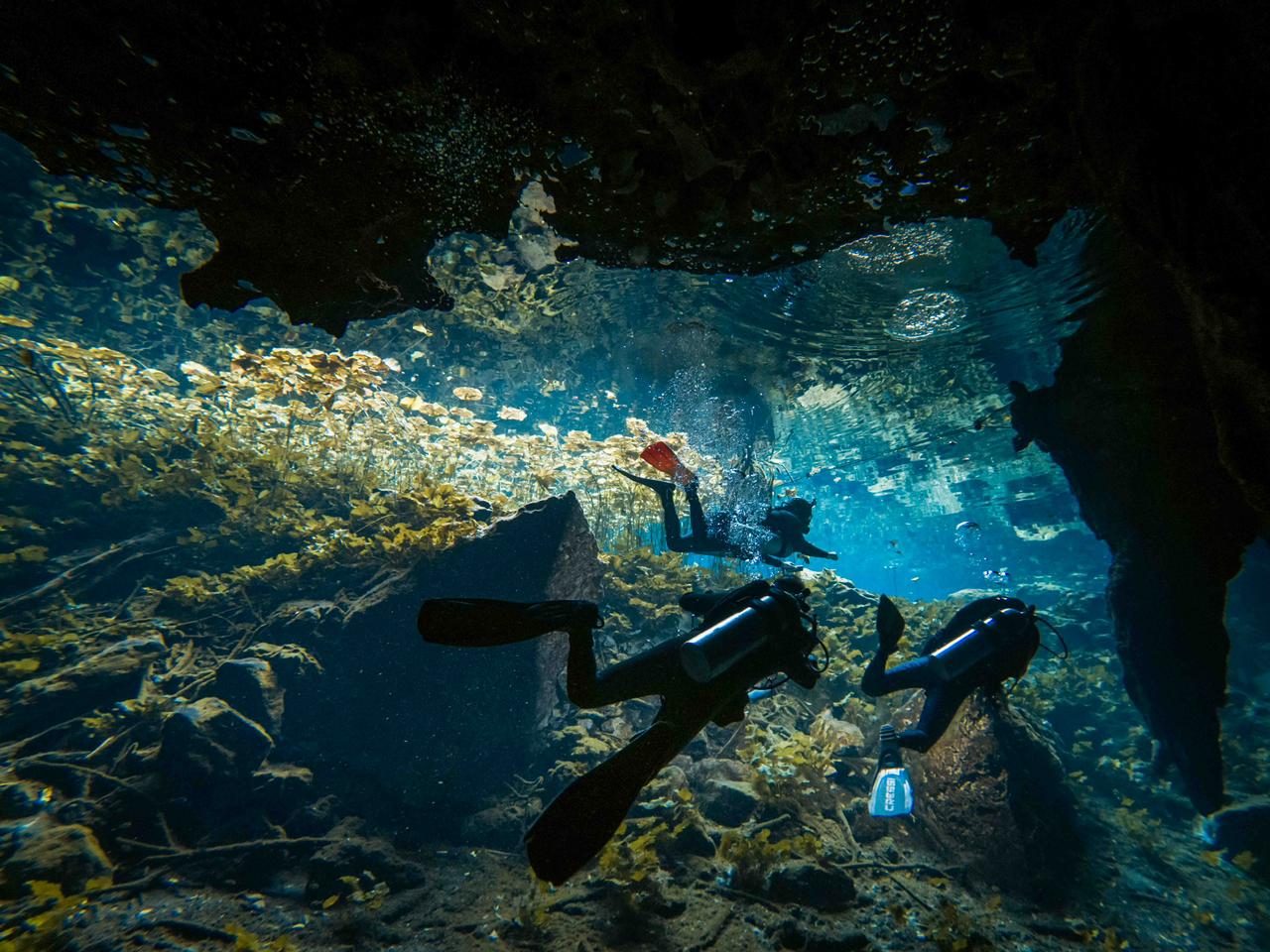
Scuba diving is often seen as a thrilling escape from the ordinary and a ticket to vibrant coral reefs and secret cenotes. Yet most people have no idea that floating below the surface even once a week can sharpen your lungs and cut stress more effectively than many land workouts. Studies show that scuba divers experience a significant drop in anxiety lasting up to a month after their last dive. That is just the start. The biggest surprise? The physical and mental benefits waiting underwater may actually rival the best gym sessions without ever lifting a dumbbell.
Table of Contents
- How Scuba Diving Improves Physical Health
- Mental And Emotional Wellness Underwater
- Unique Body Benefits From Cenotes And Haloclines
- Maximizing Health Gains In Riviera Maya Dive Sites
Quick Summary
| Takeaway | Explanation |
|---|---|
| Scuba diving boosts cardiovascular health. | Engaging in underwater activity increases muscle strength and enhances cardiovascular conditioning through natural resistance training. |
| Breathing techniques improve respiratory function. | Controlled, deep breathing while diving builds lung capacity and promotes better oxygen utilization for overall health. |
| Diving reduces psychological stress significantly. | The tranquility of underwater environments enhances mental focus, leading to lowered anxiety and prolonged stress relief. |
| Exploring unique environments enhances sensory engagement. | Diving in cenotes and haloclines stimulates neurological activity and promotes cognitive health through challenging sensory experiences. |
| Diving fosters emotional empowerment and confidence. | The weightless underwater experience helps individuals overcome physical limitations, boosting self-esteem and personal growth. |
How Scuba Diving Improves Physical Health
Scuba diving transforms physical fitness far beyond a typical recreational activity. More than just an underwater adventure, it offers a comprehensive full-body workout that engages multiple muscle groups and physiological systems simultaneously. Research published in the International Journal of Environmental Research and Public Health reveals the profound physical health benefits that make scuba diving a uniquely effective form of exercise.
Cardiovascular Conditioning and Muscular Strength
Underwater environments create natural resistance that challenges the entire body, making scuba diving an exceptional form of resistance training. When divers move through water, every motion requires additional effort compared to land-based exercises. A study indexed in PubMed demonstrates that recreational scuba diving can significantly enhance physical fitness by engaging muscle groups in ways traditional workouts cannot.
The constant movement against water resistance builds muscular strength in the legs, core, and upper body. Fin swimming particularly targets lower body muscle groups, providing an intense workout for quadriceps, hamstrings, and calves. Carrying diving equipment and managing underwater positioning further increases overall muscle engagement, creating a full-body conditioning experience that surpasses many conventional exercise routines.
Respiratory Function and Mental Wellness
Breathing techniques in scuba diving offer unique benefits for respiratory health. Controlled, deep breathing required during diving improves lung capacity and oxygen utilization. Divers learn to breathe slowly and deliberately, which not only supports safe diving practices but also enhances overall respiratory efficiency.
The mental focus required during diving contributes to stress reduction and improved mental wellness. Maintaining steady breathing while exploring underwater environments demands concentration and mindfulness. This meditative aspect of diving helps lower stress hormones, reduce anxiety, and promote a sense of calm that extends beyond the diving experience.
Beyond physical conditioning, scuba diving provides a holistic approach to fitness that integrates physical challenge, mental focus, and environmental exploration. The combination of resistance training, cardiovascular exercise, and mental engagement makes it a unique and comprehensive workout that supports overall health and well-being.
Here is a summary table comparing typical gym workouts and scuba diving physical benefits as discussed above:
| Benefit | Typical Gym Workout | Scuba Diving |
|---|---|---|
| Muscular Strength | High (targeted, with equipment) | High (full-body, natural water resistance) |
| Cardiovascular Conditioning | Moderate to High | High (continuous movement, resistance) |
| Respiratory Improvement | Moderate | High (controlled, deep breathing) |
| Core Engagement | Moderate | High (maintain buoyancy/position) |
| Calorie Burn | High (cardio-focused) | Moderate to High (varies by dive/activity) |
| Joint Impact | Can be high | Low (weightless underwater) |
Mental and Emotional Wellness Underwater
Scuba diving transcends physical exercise, offering profound mental and emotional wellness benefits that extend far beyond typical recreational activities. Research published in the International Journal of Environmental Research and Public Health reveals that underwater exploration provides a unique therapeutic environment capable of transforming mental health and emotional well-being.
Stress Reduction and Psychological Restoration
The underwater environment creates an extraordinary realm of tranquility that actively reduces psychological stress. An exploratory trial in Frontiers in Psychology discovered that participants experienced significant decreases in perceived stress levels during a one-week scuba diving course. These stress reduction benefits were not merely temporary but demonstrated lasting effects for up to a month after the diving experience.
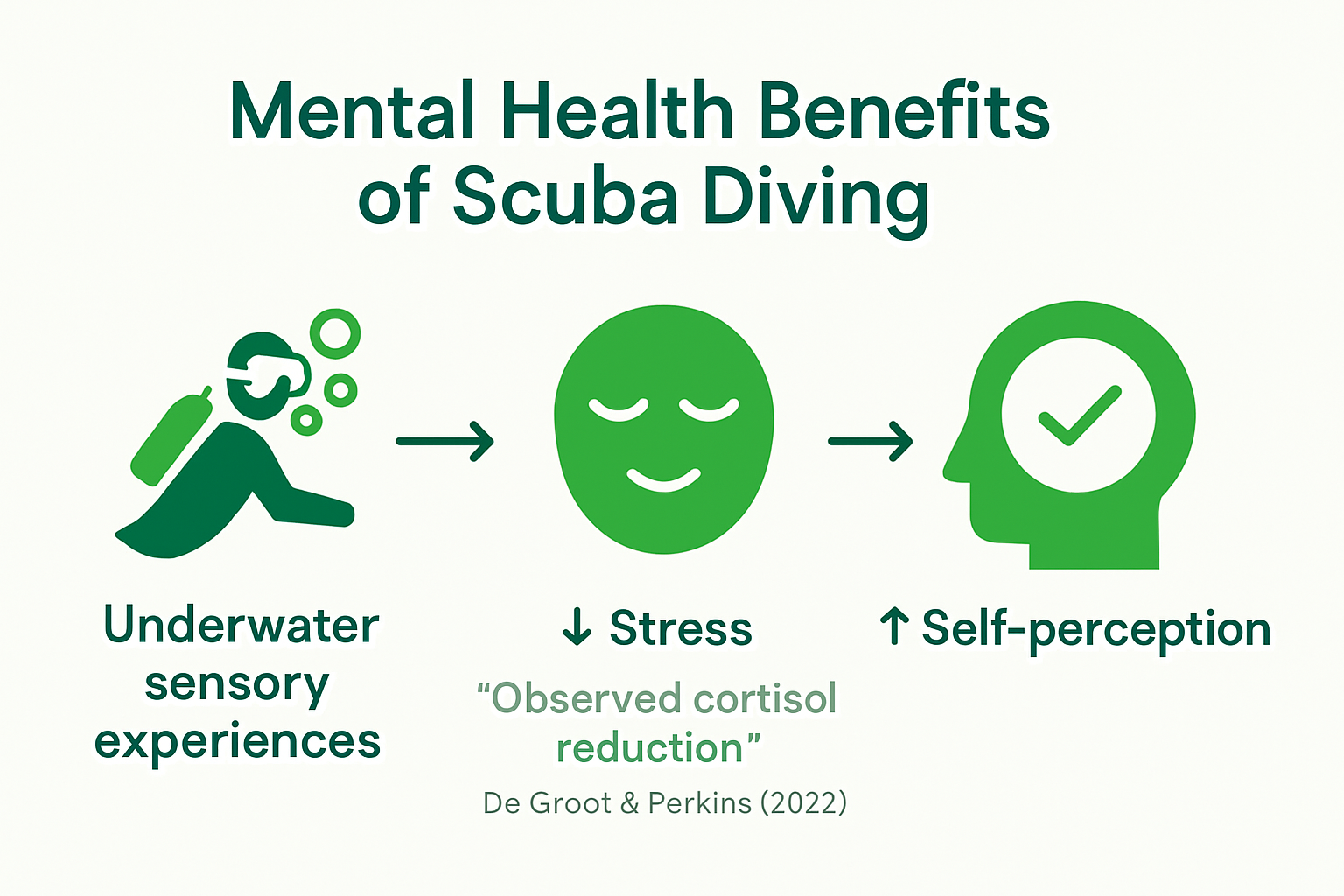
Controlled breathing techniques, combined with the weightless sensation and immersive underwater landscape, contribute to a meditative state that interrupts typical stress response patterns. The sensory isolation underwater allows divers to disconnect from daily pressures, creating a unique mental reset environment. Slow, deliberate breathing and focused attention on the surrounding marine ecosystem help regulate the nervous system, reducing cortisol levels and promoting a sense of calm.
Emotional Empowerment and Self-Perception
Beyond stress management, scuba diving offers remarkable emotional empowerment, particularly for individuals with physical challenges. Research exploring diving’s psychological impact revealed transformative experiences where participants reported enhanced self-esteem and positive emotional shifts. One compelling narrative highlighted how diving helped individuals transition from a mindset of limitation to one of capability, fundamentally changing their self-perception.
The underwater world provides a unique environment where physical limitations become less restrictive. Weightlessness allows movement that might be challenging on land, creating opportunities for individuals to experience physical freedom and challenge personal boundaries. This experience can be particularly powerful for those managing chronic conditions or physical impairments, offering a sense of liberation and renewed confidence.
The combination of physical challenge, sensory immersion, and psychological restoration makes scuba diving a holistic wellness activity. By engaging multiple sensory systems and requiring mindful presence, diving offers a comprehensive approach to mental health that goes beyond traditional therapeutic interventions. The underwater experience becomes a metaphorical and literal journey of personal exploration, resilience, and emotional growth.
Unique Body Benefits from Cenotes and Haloclines
Cenotes and haloclines offer scuba divers an extraordinary underwater environment that provides distinctive physiological experiences unavailable in traditional diving settings. Research published in Hydrobiologia highlights the remarkable geological and biological characteristics of these unique underwater formations, presenting divers with opportunities for exceptional physical and sensory interactions.
Thermoregulation and Physiological Adaptation
Diving in cenotes presents a complex thermal environment that challenges the body’s thermoregulatory systems. The layered water structures, characterized by distinct temperature zones and haloclines, require divers to adapt quickly to changing physiological conditions. When moving between freshwater and saltwater layers, the body experiences sudden temperature shifts that stimulate metabolic responses and enhance circulatory efficiency.
These rapid environmental transitions trigger the body’s adaptive mechanisms, improving cardiovascular responsiveness and thermal regulation. The abrupt temperature changes create a natural physiological workout, encouraging blood vessels to contract and expand more efficiently. This process not only enhances overall cardiovascular flexibility but also potentially boosts the body’s ability to manage temperature stress in other environments.
Sensory Stimulation and Neurological Engagement
Haloclines represent a fascinating intersection of water densities where freshwater and saltwater meet, creating a visually stunning and neurologically complex experience. The visual distortion caused by these water layers requires heightened spatial awareness and cognitive processing. Divers must navigate these environments with increased mental focus, which stimulates neuroplasticity and enhances proprioceptive skills.
The unique visual and sensory experiences in cenotes challenge the brain’s perception mechanisms. Divers must interpret visual information through layers of different water densities, requiring advanced cognitive processing and spatial orientation skills. This mental engagement contributes to improved neurological flexibility and potentially supports cognitive health by creating novel sensory experiences that break routine perceptual patterns.
Respiratory and Psychological Conditioning
Research in the Journal of Affective Disorders suggests that unique diving environments like cenotes offer more than physical challenges. The confined and stratified nature of these underwater spaces demands precise breathing control and mental composure. Divers must maintain steady, controlled breathing while navigating complex underwater terrains, which inherently trains respiratory systems and psychological resilience.
Breathing in these intricate environments requires heightened awareness and deliberate technique. The need to manage buoyancy, navigate visual distortions, and maintain calm in potentially enclosed spaces creates a comprehensive mental and physical conditioning experience. This combination of technical skill and psychological management provides a holistic training ground that extends far beyond traditional diving practices.
Cenotes and haloclines represent more than scenic diving locations. They are dynamic environments that challenge and enhance human physiological capabilities, offering a unique intersection of physical adaptation, sensory stimulation, and psychological conditioning. Each dive becomes a comprehensive wellness experience that pushes the boundaries of human performance and perception.
To help visualize the unique benefits described above, here is a table summarizing the specific body and mental benefits of cenote and halocline diving environments:
| Feature/Environment | Physical Benefits | Mental Benefits |
|---|---|---|
| Cenotes (Layered Temperatures) | Enhanced thermoregulation, metabolic stimulation | Adaptation to change, improved resilience |
| Haloclines (Fresh/Salt Mix) | Stimulates cardiovascular responsiveness | Heightened sensory awareness, neuroplasticity |
| Confined/Stratified Spaces | Advanced respiratory training | Psychological resilience, composure under stress |
| Visual Distortions | Improved proprioception, spatial skills | Cognitive processing, flexible thinking |
Maximizing Health Gains in Riviera Maya Dive Sites
The Riviera Maya offers a remarkable opportunity for divers to transform underwater exploration into a comprehensive health and wellness experience. Research on scuba diving therapy demonstrates that this region provides more than just scenic underwater landscapes, but a holistic approach to physical and psychological well-being.
Biodiversity and Mental Restoration
The Mesoamerican Barrier Reef System creates an extraordinary environment that goes beyond traditional diving experiences. With over 500 fish species and numerous endangered marine creatures, the ecosystem offers a unique opportunity for mental restoration. Observing marine life requires intense focus and mindfulness, creating a natural meditation that interrupts stress response patterns and promotes psychological recovery.
The intricate marine ecosystems of the Riviera Maya engage multiple sensory systems, providing a rich, immersive experience that challenges typical mental patterns. Divers must maintain heightened awareness while exploring complex underwater environments, which stimulates cognitive flexibility and reduces mental fatigue. This active engagement with marine biodiversity serves as a form of moving meditation, allowing participants to disconnect from daily stressors and reconnect with a more primal, present state of consciousness.
Physical Conditioning in Unique Aquatic Environments
Diving in the Riviera Maya presents exceptional opportunities for targeted physical conditioning. The varied underwater terrains, including cenotes, reef systems, and marine habitats, require diverse movement patterns that engage multiple muscle groups simultaneously. Unlike traditional gym workouts, underwater navigation demands constant adaptation to changing environmental conditions, creating a dynamic full-body exercise experience.
The resistance provided by water, combined with the need for precise movement and buoyancy control, offers a low-impact yet highly effective workout. Divers must maintain core stability, engage leg muscles for propulsion, and use upper body strength for positioning and navigation. This comprehensive approach to physical conditioning helps improve overall muscle tone, cardiovascular endurance, and functional strength in ways that land-based exercises cannot replicate.
Psychological Resilience and Stress Management
A comprehensive survey of recreational scuba divers revealed significant mental health benefits associated with underwater exploration. The controlled breathing techniques, combined with the immersive and weightless environment, create a powerful stress reduction experience. Divers report improved mood, decreased anxiety, and a sense of psychological reset that extends beyond the immediate diving experience.
The Riviera Maya’s unique diving environments challenge participants to develop psychological resilience. Navigating complex underwater landscapes requires calm, focused attention and the ability to manage potential moments of stress or uncertainty. These experiences translate directly into improved emotional regulation and mental flexibility, providing skills that are valuable in both underwater and terrestrial contexts.
Maximizing health gains in the Riviera Maya goes far beyond traditional exercise. Each dive becomes a comprehensive wellness journey that integrates physical conditioning, mental restoration, and a profound connection with the natural world. The combination of diverse marine environments, challenging underwater terrains, and rich biodiversity creates an unparalleled opportunity for holistic personal development and health optimization.
Frequently Asked Questions
What are the physical benefits of scuba diving?
Scuba diving offers a full-body workout, enhancing cardiovascular conditioning, muscular strength, and respiratory function. It engages multiple muscle groups and promotes overall physical fitness with low impact on the joints.
How does scuba diving impact mental health?
Scuba diving significantly reduces psychological stress and anxiety, promoting mental wellness. The tranquility of underwater environments and the focus on breathing techniques aid in achieving a meditative state, leading to long-lasting stress relief.
What specific benefits do cenotes and haloclines provide to divers?
Cenotes and haloclines offer unique physiological challenges such as improved thermoregulation and enhanced sensory stimulation. These environments foster both physical adaptation and psychological resilience, enriching the diving experience.
How can I maximize my health gains while diving in the Riviera Maya?
To maximize health gains in the Riviera Maya, engage in diverse diving experiences that challenge your physical strength and mental focus. The region’s rich biodiversity and unique aquatic environments contribute to enhanced physical conditioning and mental restoration.
Transform Your Health with a Personalized Cenote Dive Experience
If you are ready to unlock the powerful physical and mental benefits of scuba diving described in this guide but feel stuck finding an experience that is safe, inspiring, and truly restorative, your next step is easy. The Cenote Guy specializes in guided cenote dives across the Riviera Maya, bringing you into these healing underwater worlds with expert support. You no longer have to wonder if you are doing it right or missing out on the proven wellness gains from cenote and halocline diving. We help you access the deep stress relief, lung training, and unique sensory conditioning highlighted throughout this article with every carefully planned dive.
Make your own breakthrough and recharge your body and mind in the magical cenotes. Secure your spot now with The Cenote Guy experience. Effortlessly book online for fully personalized tours guided by Riviera Maya’s most trusted cenote diving experts. Get ready to see how much better you can really feel beneath the surface by visiting thecenoteguy.com/booknow.