
Most people book a cenote diving tour after seeing one photo of light beams in blue water. Then the night before, they look at photos of dark caverns and wonder what they signed up for.
We get this message on WhatsApp all the time: “I’m certified, but I’ve never dived under a ceiling. Is that a problem?” The answer is no. Still, the nerves are real, and they make sense because cenote diving looks nothing like the reef.
So instead of another list of rules, we want to walk you through the whole day. Here is what really happens on a cenote diving tour with us, from the hotel lobby to the last bubble.
The Night Before Your Cenote Diving Tour
The day before your dive, we message you to confirm the meeting point and time. We also ask for your measurements, so your wetsuit and BCD fit well when you arrive. Most guests relax once that message comes in, because the plan for their cenote diving tour suddenly feels real and simple.
Pack light. A swimsuit, a towel, dry clothes, and your certification card cover most of it. Our cenote diving packing list has every detail, but don’t overthink it. All the dive gear is already in our van.
One more tip: skip the big night out. Drink plenty of water and eat a good dinner. A rested body handles cool water and new sensations much better.
Morning Pickup and the Ride to the Cenote
We meet around 8:00 AM in Playa del Carmen, or 9:00 AM in Tulum. The early start is on purpose. The morning light is softer, and the popular cenotes are still quiet.
First, we check your certification and sign the paperwork. Then comes a ride of about 30 minutes into the jungle. This part matters more than people think. Your guide uses the drive to explain the dive plan, the guideline, and the hand signals you will use.
It’s also the moment to talk about your nerves. Tell us if you get cold easily, or if your ears are slow to equalize. We would rather know now than at 10 meters.

Walking the Site Before You Get Wet
Once we park, you set up your gear with your guide. He checks your tank pressure and looks over each piece of equipment with you. Nothing is rushed.
Next, we walk the site together. You see the entrance, the stairs, and the spot where the dive begins. This short walk is one of the best parts of a cenote diving tour, especially for first-timers. When you can see the water and the path, your brain stops guessing. The cenote becomes a real place, not a mystery.
Bring your camera on this walk. The jungle around the water is half the fun, and the light at the entrance looks beautiful early in the day.

The First Minutes Underwater
You step into the water, and the first thing you notice is the temperature. Cenote water stays around 25 to 26°C (77 to 78°F) all year. It feels cool at first, but your wetsuit warms up fast. If you get cold easily, ask for a thicker suit or a hood. We bring them at no extra cost.
The second thing is the clarity. On a good day you can see 30 meters ahead or more. Many divers say it feels like floating in air, and some of them laugh into their regulator.
Then you descend slowly with your guide. Take your time with your ears, and equalize early and often. DAN shares 10 tips for easy equalizing that are worth reading before your trip. After the descent, you settle your buoyancy, check in with your guide, and follow the line.
That Rock Ceiling Over Your Head
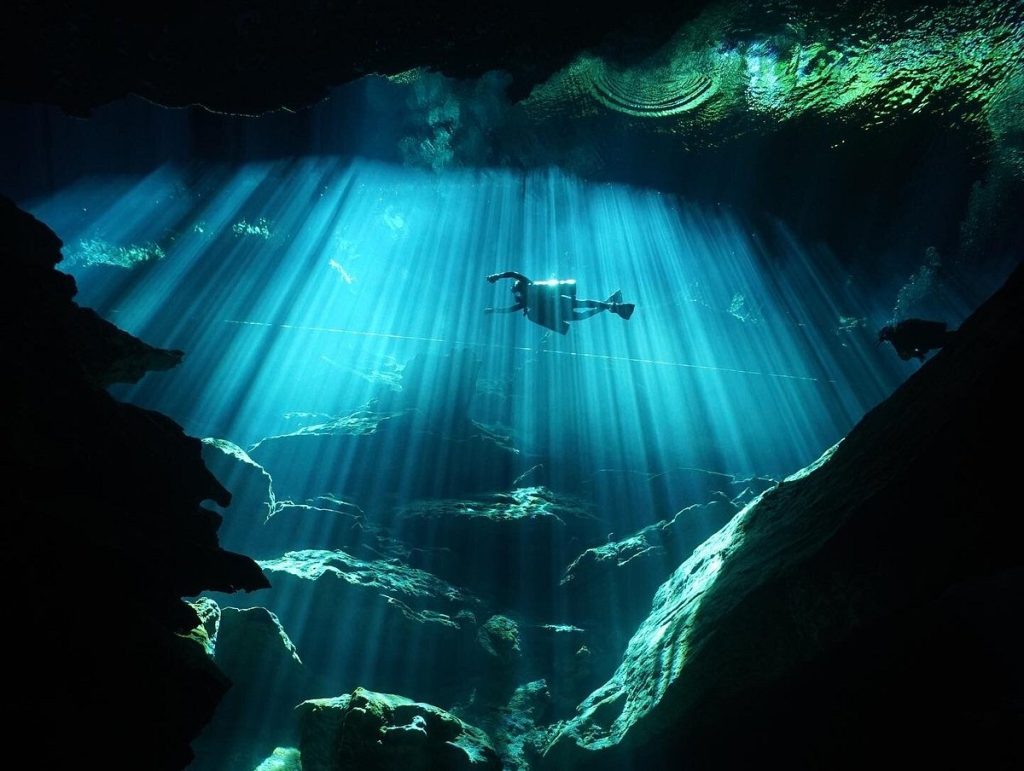
This is the part people worry about most. In a cenote, there is rock above you. But on a guided cavern dive, you always stay within the light zone. You can see daylight from the entrance at every point of the dive.
Before the tour, most people expect to feel trapped. Instead, they feel safe. The passages are wide, the guideline sits right beside you, and your guide stays close. If you want to know where the limits are, our post on whether you need a cave certification explains cavern and cave diving in plain words.
Keep your fins calm, too. Cenote floors hold fine silt, and a big kick can cloud the water for the divers behind you. A slow frog kick keeps everything clear, and your guide will show you how during the briefing.
What Surprises People on Their First Cenote Diving Tour
After hundreds of dives with new guests, we see the same reactions again and again:
- The light beams. When the sun hits the water, rays shoot straight down through the cavern. Photos never fully capture it.
- The silence. There are no waves, no boats, and no current. You only hear your own bubbles.
- The rock shapes. Stalactites hang from the ceiling like a frozen chandelier. They formed thousands of years ago, when these caves were still dry.
- How fast time goes. A 45 minute dive feels like 15.
- How calm they feel. Most people come up grinning, not shaking.
Why the Second Dive Feels Easier
Between dives, you rest on the surface while your guide works out the timing. We keep a cooler with water and snacks in the van, so help yourself. Sometimes we stay at the same site. Other times we drive to a second cenote nearby, and we tell you the plan at the start of the day.
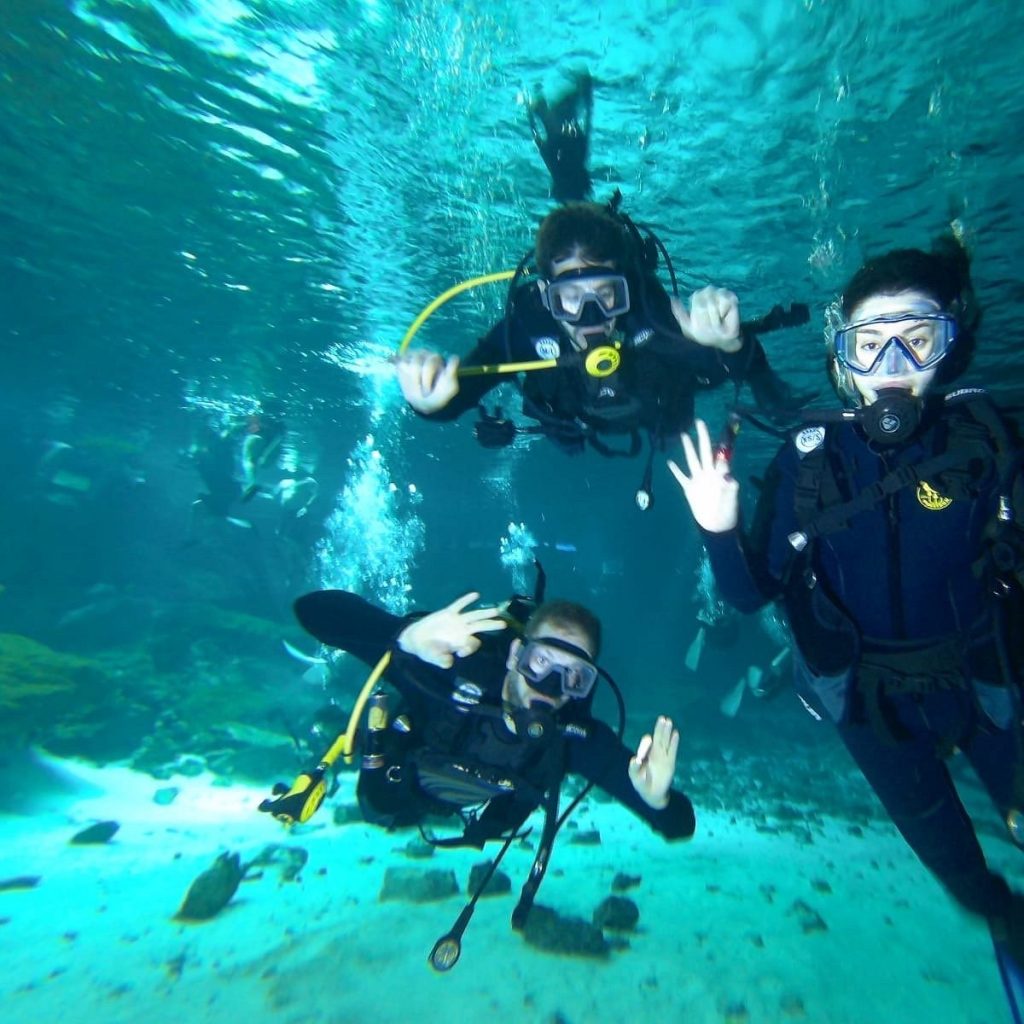
The second dive is where most people fall in love with cenote diving. The nerves are gone. Your buoyancy feels better, so you start to look around instead of staring at your gauges. You notice the small things: tiny fish near the entrance, tree roots hanging through the ceiling, and the way the light shifts.
For a first day, a combo like Kukulkán and Little Brother works well, because both cenotes are bright and easy to follow.
Lunch, Stories, and the Ride Back
After two dives on two different lines, we share a meal at a local Mexican restaurant. On some days it’s sandwiches instead, depending on the site and timing. Either way, this is when the stories start. Everyone wants to talk about the light.
You’ll be back in Playa del Carmen or Tulum between about 2:30 and 4:30 PM. If you fly home soon after, read our guide on how long to wait before flying after cenote diving before you book. For the full schedule, see our cenote diving day description.
Cenote Diving Tour FAQs
Is a cenote diving tour hard for new divers?
No. If you hold an Open Water certification and feel okay with basic buoyancy, a guided cavern dive is well within your skills. We also limit groups to 4 divers per guide, so you get close attention.
Do I need my own gear for a cenote diving tour?
No. All dive equipment on our cenote diving tour is included, and we carry spare wetsuits and BCDs. Still, you are welcome to bring your own mask or dive computer.
Will I feel claustrophobic in a cenote?
Most people don’t. Cavern dives stay in the daylight zone, and the spaces are wide. Tell your guide about any worries before the day, so they can pick the right cenote for you.
How long does a cenote diving tour take?
Plan for most of the day. Pickup is around 8:00 AM, and you get back between 2:30 and 4:30 PM. Each dive usually lasts 45 to 60 minutes, depending on the site and your air use.
What if I haven’t dived in a while?
Tell us when you book, and talk to your guide about it on the drive. Then your guide can plan the day and the dive sites around your comfort level.
Your first minutes in a cenote will feel strange. After that, the whole cenote diving tour feels like the best decision of your trip. Have a question first? Send us a message on WhatsApp, and we’ll help you choose the right cenotes for day one.


